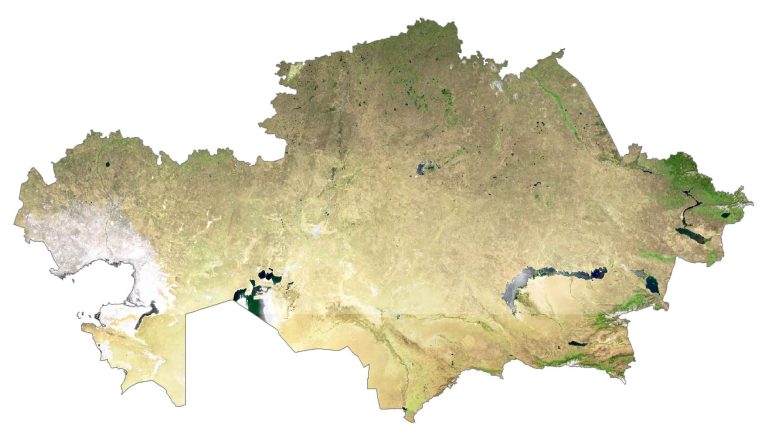
Kazakhstan, the largest landlocked country in the world and the ninth-largest overall, is located in Central Asia and
partly in Eastern Europe, sharing borders with Russia, China, Kyrgyzstan, Uzbekistan, and Turkmenistan. Its diverse
landscape contains extensive steppes, mountainous regions, deserts, and semi-deserts, such as the Kazakh Uplands,
the Altai Mountains in the east, the Caspian Depression, and the vast Kazakh Steppe. The desert areas of the country,
such as the Kyzylkum and Betpak-Dala Deserts, are beautifully contrasted with its unspoiled mountains and calm lakes such as
the Caspian Sea, the world's largest enclosed inland water body, and Lake Balkhash, which interestingly hosts freshwater and
saltwater. Its rivers, including the Irtysh, Ural, and Syr Darya, are ecologically important and of use in agriculture. Kazakhstan's
climate is continental and extreme, characterized by hot summers and cold winters, with arid and semi-arid conditions dominating
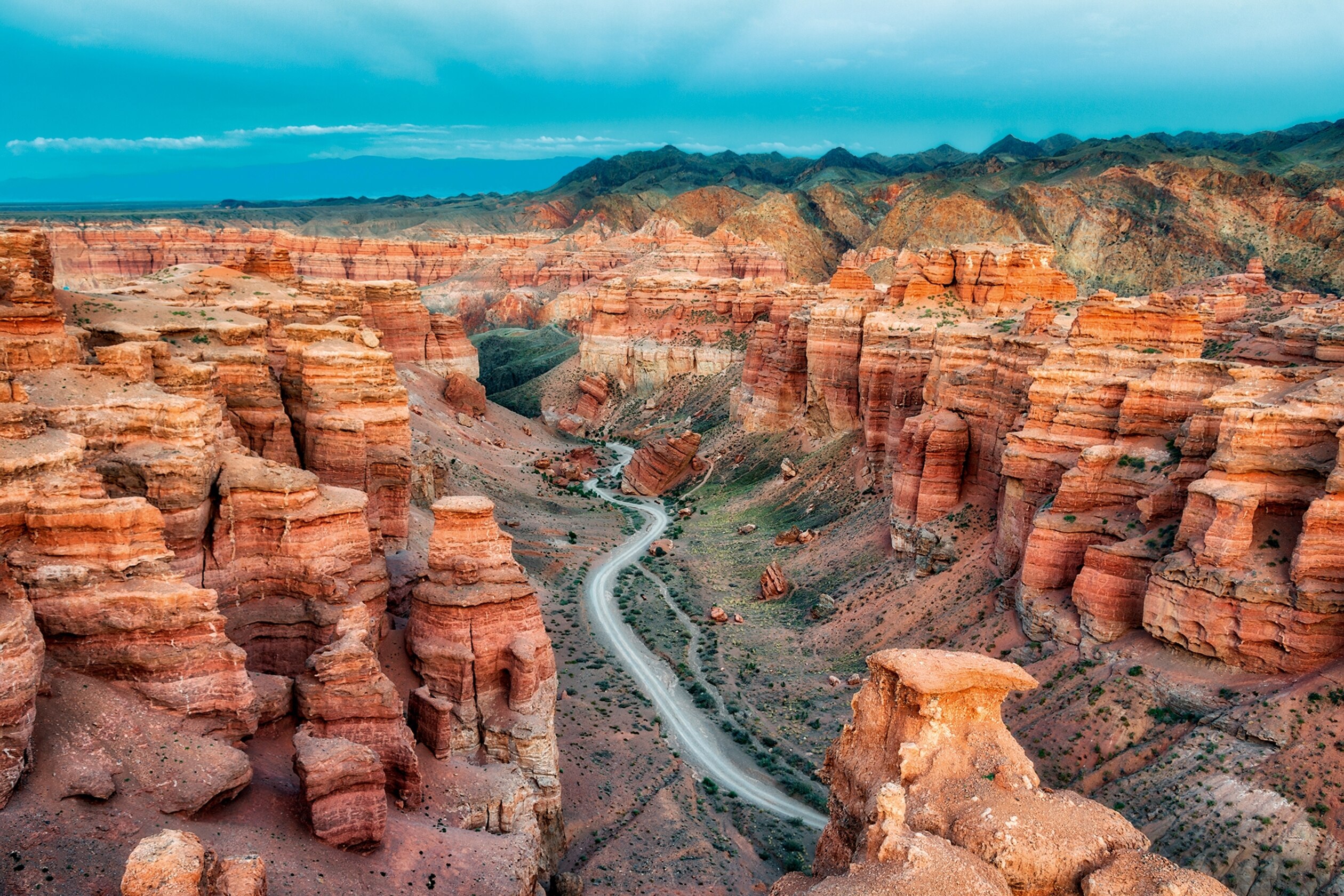
along much of its extent. The stunning Charyn Canyon, which is frequently compared to the Grand Canyon, the pristine beauty of the
Altai Mountains, and the serene vastness of the Great Steppe reveal the nation's natural splendor, while environmental
problems such as the dwindling Aral Sea remind us of the importance of sustainable methods. With its rich and varied geography
mirroring its rich and varied history, Kazakhstan provides a landscape as diverse and rich as its cultural heritage






:max_bytes(150000):strip_icc()/Fotolia_61844377_M-57bbd21f3df78c876366bea7-5a5b234d13f1290036857a5f.jpg)